Storm shelters for churches, schools and businesses in the Big Country
Residential shelters get all the attention, but the buildings that hold the most people during a weekday afternoon or a Wednesday evening are usually the ones with the least protection. Churches, daycares, small schools, medical offices, warehouses, mobile home parks and job-site trailers all fall into the same gap: large open spans, lightweight roof structures, and nowhere interior that is genuinely rated.
West Texas has a specific version of this problem: the towns are small, the buildings are metal, and the region's tornadoes do not schedule around occupancy. The 2019 Abilene tornado damaged businesses as well as homes across the city's west side; the 2024 Hawley storm destroyed a house under construction and threw vehicles — a job site, in other words. Some rural districts in the region have built school safe rooms; in 2019 it was a school shelter well west of town that opened its doors to the public, because the city itself has none.
What changes when it is a commercial shelter
- ICC-500 is enforced, not suggested. Jurisdictions adopt the IBC and IRC, which bring ICC-500's technical requirements into force. For an assembly or educational occupancy this is a permit matter from day one.
- Occupancy maths drives the footprint. Roughly three to five square feet per occupant for a short-duration windstorm, depending on occupancy type. That number, multiplied by realistic peak occupancy, sets the shelter size before anything else is decided.
- Travel distance is a design constraint. People have to be able to reach it in the warning time actually available. A shelter across a parking lot is not a shelter.
- Accessibility is not optional. Wheelchair access, door widths and a step-free route have to be designed in.
- Dual use makes it affordable. Storage, records, a break room or a classroom the rest of the year, provided everyday use never blocks the door.
Who this is for
- Churches and fellowship halls. Midweek and Sunday evening attendance overlaps directly with peak severe-weather timing in West Texas.
- Daycares and preschools. The occupants least able to shelter themselves, in buildings rarely designed for it.
- Schools and after-school programs. ICC-500 compliance is the starting point, and community safe room design guidance under FEMA P-361 is the higher target.
- Manufactured housing communities. The highest-risk housing stock in a tornado. Usually several distributed shelters rather than one.
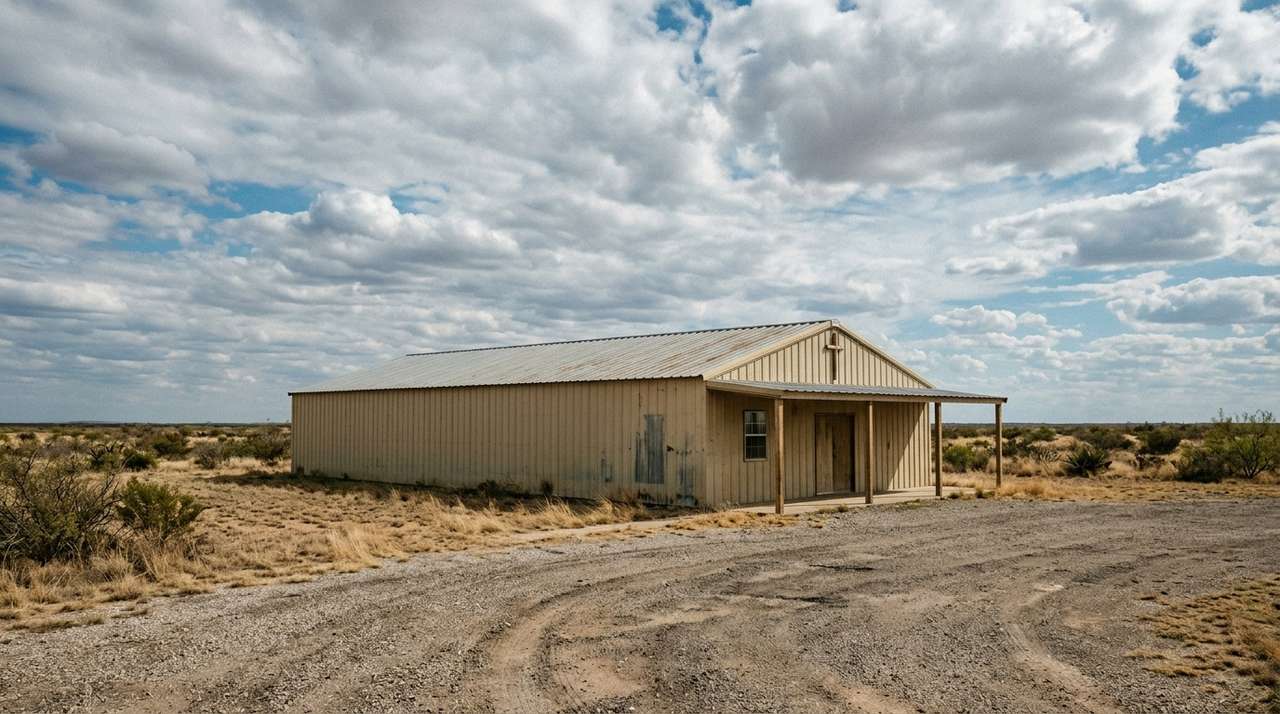
- Warehouses, shops and job sites. Large clear spans with lightweight roofs and no interior refuge — and in this region, a lot of them.
- Medical and dental offices. Patients mid-procedure cannot be moved far or fast.
How a commercial storm shelter project starts
Differently from a residential one. The first conversation is about peak occupancy, the building's construction, where people actually are during the day, and what the building department will require for the occupancy class. From there it is a design and permitting exercise before it is a purchase.
Tell us the building type, the peak head-count you need to protect and roughly where you are, and you will be matched with a Big Country installer who handles commercial work. Call (325) 672-9548 or use the contact form.